


What Does a Flagstaff Truck Accident Lawyer Do When the Trucking Company Blames Snow and Ice?
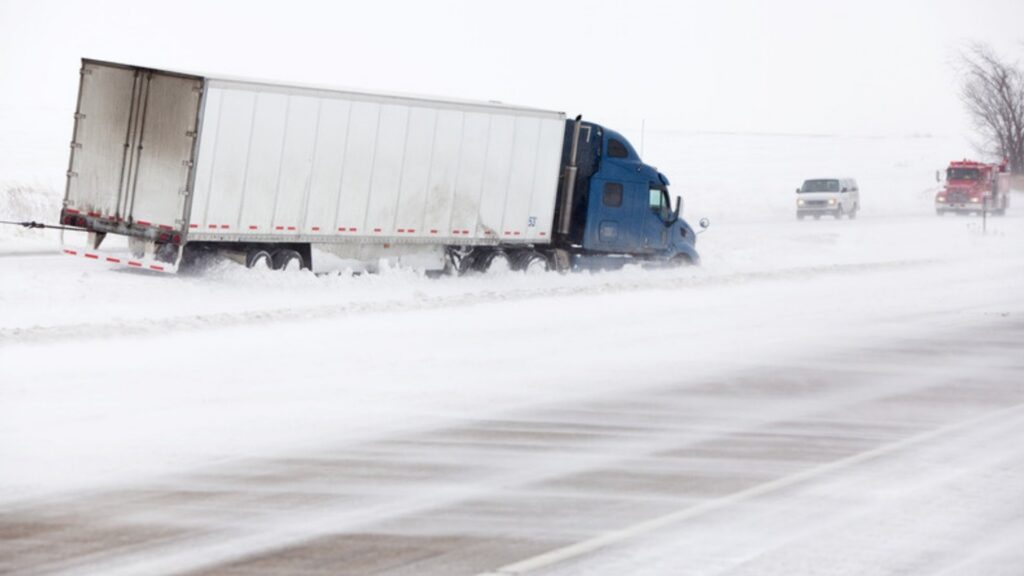
Snow and ice rarely excuse a semi crash on their own. A Flagstaff truck accident lawyer starts with 49 C.F.R. 392.14, which orders truck drivers to slow down in hazardous weather and to stop driving when conditions turn too dangerous. Arizona’s speed law, A.R.S. 28-701, also ties a lawful speed to the conditions.
Justice On Demand is an Arizona personal injury firm based in Mesa that handles truck crash claims across the state, including wrecks on the interstates around Flagstaff. The phone line is open 24/7, so you can reach the firm the same night a storm closes the highway. This page covers the weather defense, the rules that limit it, and the records that usually decide it.
If a semi slid into you on I-40 or I-17, call Justice On Demand at (480) 934-0676 for a free consultation. You get straight answers about your crash, and the call does not commit you to anything.
Can a Trucking Company Blame Snow and Ice for a Crash Near Flagstaff?
Not by itself. Under 49 C.F.R. 392.14, hazardous weather calls for more care from a truck driver, not less. That rule is the first thing a truck accident lawyer in Flagstaff raises when an adjuster says the ice caused the wreck. It binds interstate truck drivers on I-40 and I-17, whatever state issued their license.
So why do carriers keep blaming the storm? Arizona divides fault by percentage under A.R.S. 12-2505, and A.R.S. 12-2506 makes each defendant pay only its own share. When the company shifts blame onto the road, the weather or you, its own share can shrink with it. How far that argument gets depends on the facts of your crash, and a lawyer has to test those facts one record at a time.
What 49 C.F.R. 392.14 Requires of a Truck Driver in Snow
The federal rule applies whenever conditions such as snow, ice, sleet, fog, mist, rain, dust or smoke hurt visibility or traction. Once those conditions exist, it stacks three separate duties on the driver. Each duty is its own question about what the trucker chose to do before the slide. You can read the full text of 49 C.F.R. 392.14 in the Electronic Code of Federal Regulations.
- Extreme caution is required for as long as the hazardous conditions last.
- Speed must come down when those conditions exist.
- Driving must stop once conditions become sufficiently dangerous, and it may not resume until the truck can be operated safely.
The third duty is the one adjusters skip. A trucker who kept rolling through a whiteout made a choice the rule speaks to directly.
How A.R.S. 28-701 Ties a Safe Speed to Winter Conditions
A.R.S. 28-701(A) bars driving “at a speed greater than is reasonable and prudent under the circumstances, conditions and actual and potential hazards then existing.” The same subsection tells drivers to control speed as needed to avoid hitting a vehicle on or entering the highway. Subsection D calls for a slower speed when weather or highway conditions create a hazard. A semi traveling well under the posted limit on packed snow can still break Arizona’s reasonable and prudent speed statute. Whether a particular speed was reasonable is a fact question, and it turns on the road, the load and the timing.
Why Winter Semi Crashes Pile Up Where I-40 Meets I-17
Flagstaff sits where two freight corridors meet. On the morning of November 6, 2024, troopers responded to crashes involving up to eight vehicles on I-40 near the I-17 junction, AZFamily reported. Several commercial trucks jackknifed and blocked eastbound and westbound lanes, and DPS reported about half an inch of ice on the road.
On March 7, 2025, a winter storm stalled westbound I-40 for more than 15 miles between Flagstaff and Williams, the Associated Press reported. A truck that cannot stop for a line of stalled cars creates the exact crash 392.14 is written to prevent.
Which Agency Writes the Crash Report in Flagstaff
The agency that investigated decides where you get the report and who holds the photos, measurements and witness names. That depends on where the truck came to rest. The report records road surface and weather. An officer can also mark speed too fast for conditions as an entry separate from exceeding the posted limit, which our guide to reading an Arizona crash report explains.
DPS Highway Patrol District 2 on the Interstates
Arizona Department of Public Safety troopers handle crashes on I-40 and I-17. The Flagstaff office is Highway Patrol District 2, at 1100 West Kaibab Lane. A jackknife that shuts the interstate draws a trooper, and that DPS report becomes the first document both sides read. DPS also runs a Commercial Vehicle Enforcement unit that inspects trucks and enforces the federal motor carrier rules.
Flagstaff Police and the Coconino County Sheriff Off the Interstate
A crash on a city street inside Flagstaff limits, such as Butler Avenue or Route 66, usually draws a Flagstaff Police Department officer. Crashes on unincorporated county roads fall to the Coconino County Sheriff’s Office. Delivery trucks crash on those roads too, and A.R.S. 28-701 applies there just the same. Confirm which agency responded before you request anything.
Where Crash Victims Are Treated and Where a Coconino County Case Is Filed
Serious injuries from a semi crash around Flagstaff often go to Flagstaff Medical Center at 1200 N. Beaver St. The Arizona Department of Health Services lists it as a state-designated Level I trauma center through May 27, 2027. It is the only Level I center on that list outside the Phoenix and Tucson areas. Coconino County Superior Court sits at 200 N. San Francisco Street in Flagstaff. For other crash types in the area, see Justice On Demand’s Flagstaff personal injury page.
Does the Sudden Emergency Doctrine Excuse a Jackknife on Ice?
Rarely. In Myhaver v. Knutson, 189 Ariz. 286 (1997), the Arizona Supreme Court kept the sudden emergency jury instruction but urged trial judges to give it “only in the rare case.” The court said it should be confined to emergencies “not of the routine sort.” It also repeated an older rule that a driver whose own negligence helped create the emergency gets no benefit from the doctrine.
Snow on I-40 in winter is routine in Flagstaff, and forecasters usually warn about it in advance. A trucker who drove too fast for packed snow and then lost traction helped create the emergency. Expect the carrier to ask for the instruction anyway, because the judge decides whether the evidence supports it in each case.
Why Forecast Snow Is Not an Emergency Under Myhaver
The doctrine is built for the unexpected, such as a car spinning out directly in front of a truck that was already driving with care. A storm the National Weather Service warned about before the trip is the opposite. Truck drivers and dispatchers can check that forecast before the run starts. The warning, the dispatch time and the speed data together show whether the driver met a routine hazard or a true emergency.
When the Weather Argument Can Still Cut Into a Claim
Weather still matters. Some facts genuinely help a trucking company, and a lawyer looks for them early. Under A.R.S. 12-2505, any share assigned to you reduces your damages by that percentage but does not bar the claim. These situations can move fault away from the truck.
- A patch of ice formed on a bridge deck with no warning, and the truck was already moving slowly.
- Another vehicle spun out in front of the truck with too little room for any driver to stop.
- The injured driver was also going too fast for the road, so the fault gets split rather than ending the case.
How much any of these facts moves the numbers depends on the evidence behind them. No lawyer can promise a fault split before the logs, the engine data and the witness accounts are in hand.
How the Adverse Driving Conditions Exception Can Backfire on a Carrier
Hours-of-service rules seem unrelated to weather until you read the exception built into them. Under 49 C.F.R. 395.3(a), a property-carrying driver may drive 11 hours within a 14-hour window after 10 hours off duty. A 30-minute break is required after 8 hours of driving.
Truckers who run into a storm sometimes claim a weather extension to explain long hours on the log. That claim comes with a definition about timing. When the storm was forecast before the trip, the extension can turn into proof that the company knew what was coming.
The Two Extra Hours Allowed by 49 C.F.R. 395.1(b)(1)
Section 395.1(b)(1) lets a driver who meets adverse driving conditions drive up to two extra hours beyond the normal limits. The extra time is only for finishing the run or reaching a place that is safe for the driver, the truck and the cargo. It does not excuse speed, and it does not cancel the duty in 392.14 to stop when the road is too dangerous. A log showing driving past 11 hours tells a lawyer the carrier is likely to rely on this exception.
What Section 395.2 Counts as Adverse Driving Conditions
The definition in 49 C.F.R. 395.2 covers snow, ice, sleet, fog and other adverse weather, plus unusual road or traffic conditions. The catch is timing. The conditions count only if they “were not known, or could not reasonably be known” at three moments the rule names.
- The first moment is just before the driver begins the duty day.
- The second is just before the driver starts driving again after a qualifying rest break or sleeper berth period.
- The third is just before the motor carrier dispatches the driver.
Why a Storm Warning Issued Before Dispatch Undercuts the Exception
A forecast is the plainest way to show the conditions could reasonably be known. If the National Weather Service warned about heavy snow on I-40 hours before the truck left, the carrier has trouble calling the storm a surprise. The exception covers weather a careful driver had no reasonable way to expect. Two records usually settle the timing question.
The Bellemont Warning and the Time It Was Issued
The National Weather Service office that covers Flagstaff sits at 49 Hughes Ave. in Bellemont, west of the city. Its winter storm warnings carry an issue time, and archived copies stay available after the storm passes. A lawyer lines that time up against the moment the truck was dispatched and the moment the driver went on duty.
The Dispatch Record and the Start of the Duty Day
Dispatch messages show when the load was assigned and what the dispatcher said about the weather. The electronic log shows when the driver came on duty and when driving resumed after each break. Put those beside the warning, and you can see whether anyone at the company knew about the storm at the moments section 395.2 names.
Delivery Schedules That Ignore the Weather Under 49 C.F.R. 392.6
A separate rule reaches the company itself. Under 49 C.F.R. 392.6, a motor carrier may not schedule a run that would require speeds above what the states along the route prescribe. Arizona prescribes speed by conditions in A.R.S. 28-701, so a schedule that only works at dry-road speed in a snowstorm raises a real question. Dispatch messages pushing a driver to keep a delivery time through a closure are the evidence that answers it.
Records a Flagstaff Truck Accident Lawyer Requests After a Winter Crash
Weather cases turn on timing, and the timing lives in records the trucking company controls. The federal minimum for keeping a driver’s records of duty status and supporting documents is 6 months, under 49 C.F.R. 395.8(k)(1). Its accident register lists each crash with the date, location, driver and injuries, and 49 C.F.R. 390.15(b) requires it to be kept for 3 years.
A preservation letter early in the case asks the company to save everything before routine deletion. The filing deadlines for Arizona truck claims run on their own clock, and the records clock is usually shorter.
Logs, Engine Data and Dispatch Messages
Each record answers a different part of the weather question. Some show what the driver knew, and others show what the truck was doing in the seconds before the slide. A lawyer asks for all of them at once, because each one checks the others. These are where most winter truck investigations start.
- Electronic logging device records show duty status, driving time and any claimed extension of the hours limits.
- Engine control module data on many trucks stores speed, braking and throttle in the moments before a crash.
- Dispatch and in-cab messages show what the company told the driver about the storm and the delivery time.
- Any written winter driving policy and the driver’s training file show what the company expected on snow.
If a record the carrier had to keep never turns up, that gap is worth a written question.
Hazard Flashers and Warning Triangles After a Jackknife
A jackknifed trailer across a lane can cause a second crash when the next vehicle arrives. Under 49 C.F.R. 392.22, the stopped driver must turn on the hazard flashers immediately. Warning devices must go out as soon as possible, and in any event within 10 minutes. On a divided highway like I-40, they go 100 and 200 feet back toward approaching traffic, plus one within 10 feet of the rear of the truck. Scene photos and the trooper’s notes usually show whether they were there.
Can the Trucking Company Blame ADOT for an Unplowed Interstate?
It can try. A.R.S. 12-2506(B) lets a jury weigh the fault of a nonparty when the defendant gives notice under the court rules. A trucking company that blames the condition of I-40 or I-17 can try to name the State of Arizona, through ADOT, as a nonparty at fault. Any percentage the jury assigns to the State is not paid by the trucking company.
The road question gets checked early. Whether a plowing or closure decision really contributed to your crash is a fact question that depends on what ADOT knew and when. Two deadlines decide whether you can answer the argument in full.
The 150-Day Nonparty Notice Under Arizona Rule 26(b)(5)
Arizona Rule of Civil Procedure 26(b)(5) gives a defendant 150 days after filing its answer to name a nonparty at fault. The notice has to identify the nonparty, say where it can be found and give the facts behind the blame. That date often falls many months after the crash. Our page on who can be held liable for a truck accident in Arizona explains how several liability splits a judgment.
The 180-Day Notice of Claim Against the State
A claim against the State runs on a different clock. A.R.S. 12-821.01 requires a notice of claim within 180 days after the claim accrues, and A.R.S. 12-821 sets a one-year limit to sue a public entity. Those 180 days can end before a carrier’s nonparty notice is even due. Accrual and tolling questions can move these dates, so the exact deadline in your case needs a lawyer’s review.
Questions Drivers Ask After a Winter Truck Crash Near Flagstaff
These questions come up after a semi crash on a snowy interstate near Flagstaff. Each answer points back to the federal or Arizona rule that controls it. Your own facts can change the result, so treat these short answers as a starting point for a conversation with a lawyer.
Can a Freight Broker Be Sued After a Winter Truck Crash?
Sometimes. In Montgomery v. Caribe Transport II, LLC, decided May 14, 2026, a unanimous U.S. Supreme Court held that federal trucking law does not preempt a negligent-hiring claim against a broker that chose an unsafe carrier. The claim still needs proof that the broker knew or should have known the carrier was unsafe.
What if My Car Slid Into the Truck First?
You can still bring a claim. A.R.S. 12-2505 reduces your damages by your share of fault instead of barring recovery, except in rare cases of intentional or wanton conduct. A truck that was also going too fast for the snow can still carry most of the blame, depending on the evidence.
Is the Filing Deadline Different for a Truck Crash in Coconino County?
No. A.R.S. 12-542 gives two years for most injury claims anywhere in Arizona, and a claim against a public entity needs the 180-day notice first. The evidence windows are much shorter, which is why records requests go out before anything else.
Does the Weather Box on the Crash Report Decide Fault?
No. The report records road surface and weather to help investigators reconstruct the scene. It does not assign legal fault, and a box marked snow or ice excuses no one. The trooper’s narrative and any violation entries usually carry more weight.
Ask a Flagstaff Truck Accident Lawyer to Test the Weather Excuse
When a trucking company blames the snow, the answer sits in the logs, the forecast and the dispatch record, read side by side. A Flagstaff truck accident lawyer puts those records together before the 6-month retention window closes. Justice On Demand reviews winter truck crashes on I-40, I-17 and the roads around Flagstaff.
Call (480) 934-0676 for a free consultation. The line is open 24/7, so a crash on a storm night does not have to wait until Monday. If writing is easier, send the details through the contact page.
Justice On Demand gives new clients an initial 30-day satisfaction period. Every case turns on its own facts, and no lawyer can promise how fault will be split. A lawyer can still test the weather excuse against the records before anyone accepts it.