


Will a Tempe Car Accident Lawyer Take Your Case to Trial in Maricopa County?
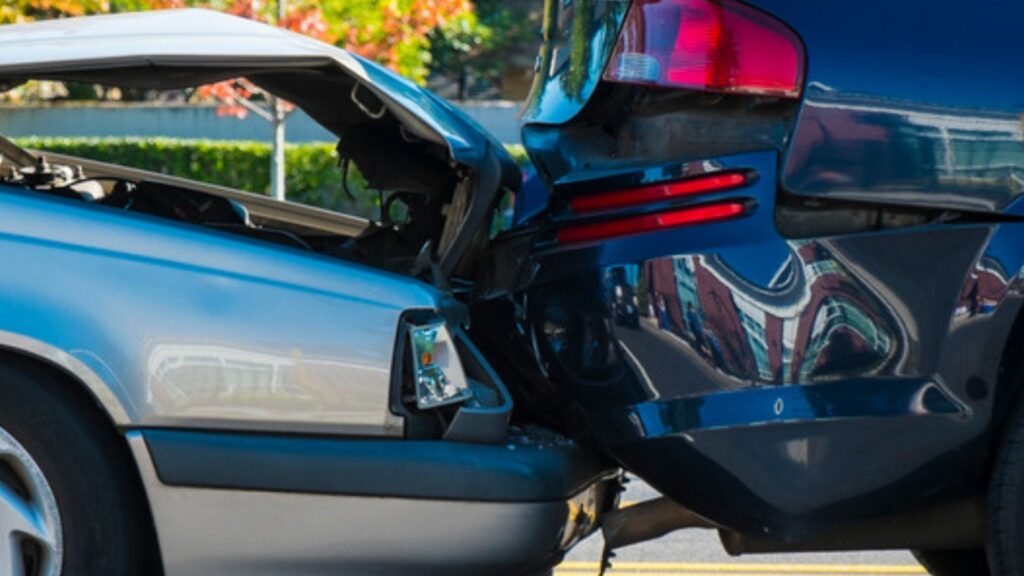
Most claims a Tempe car accident lawyer handles end in a settlement, not a jury verdict. A lawsuit seeking more than $10,000 goes to Maricopa County Superior Court. Claims the court values under $50,000 go first to compulsory arbitration, where a local lawyer decides the award. Larger claims move through discovery toward an eight-person jury.
Justice On Demand is an Arizona personal injury firm that handles car, truck, motorcycle, rideshare, and slip and fall claims. It works from its office at 1148 W Baseline Rd, Mesa, AZ 85210, and takes cases from Tempe and across the East Valley. The firm is open 24/7, and consultations are free. So where would your case actually be heard, and who would decide it?
If you were hurt in a Tempe car crash, call Justice On Demand at (480) 934-0676 for a free consultation. Someone answers 24/7, and the first call costs nothing.
How Often Does a Tempe Car Accident Lawyer Take a Case to Trial?
Far less often than people expect. At Justice On Demand, a car accident lawyer in Tempe starts with an insurance claim, not a courtroom. Most claims settle with the at-fault driver’s insurer once the medical picture is clear. A trial is the last step in a long process, and every earlier step gives both sides a chance to settle.
No one can tell you on day one whether your case will reach a jury. That depends on the insurer’s offer, the proof of fault, and the size of the claim, and a lawyer has to review those facts first. What Arizona law does set is the route. The amount at stake decides which court hears the case and whether arbitration comes before any trial.
Most Car Claims Begin as Insurance Claims
Nearly every crash claim runs first against the at-fault driver’s liability policy. The adjuster investigates, reviews your medical records, and makes an offer. Your side answers with a demand built on the bills, the lost wages, and the effect on your daily life. Many claims end right there, months before anyone files a lawsuit. A case reaches a courthouse only when that negotiation stalls.
When Filing a Lawsuit Makes Sense
Filing suit does not mean you want a trial. It keeps the claim alive and gives your lawyer subpoenas, depositions, and a judge to enforce deadlines. Under A.R.S. 12-542, an injury lawsuit must be filed within two years after the crash. These situations usually lead to a filing.
- The insurer denies that its driver caused the crash.
- The offer stays well below your medical bills and lost wages.
- The two-year deadline under A.R.S. 12-542 is getting close.
- A City of Tempe vehicle hit you, so a notice of claim is due within 180 days under A.R.S. 12-821.01.
Filing does not set a trial date. It starts a process, and most of that process happens on paper. The firm’s article on filing deadlines after a Tempe truck crash walks through the same two clocks in more detail.
Which Court Hears a Car Crash Lawsuit From Tempe?
Tempe has no courthouse of its own for injury lawsuits. Where your case goes depends on the dollar amount you ask for. Arizona splits civil claims between the county’s justice courts and Maricopa County Superior Court, and the line sits at $10,000.
A traffic ticket is a separate matter. Under A.R.S. 22-402, a city court can hear state law violations committed inside city limits, so a citation from Tempe police usually goes to Tempe Municipal Court. Your injury claim moves on its own track, in a different court, with its own rules.
Justice Courts for Claims of $10,000 or Less
Under A.R.S. 22-201, justice courts have exclusive original jurisdiction over civil cases worth $10,000 or less. In Maricopa County, the same statute ties a case to the justice precinct where it arose. Much of central Tempe, along University Drive and Apache Boulevard, falls in the University Lakes Justice Precinct. That court sits at 201 E. Chicago Street in Chandler, not in Tempe.
Small Claims Cases of $5,000 or Less
A.R.S. 22-503 sets the small claims limit at $5,000. Small claims moves fast, but the trade-offs are steep for an injury case. Under A.R.S. 22-512, a lawyer may not appear or take any part in filing or defending the claim. Under A.R.S. 22-519, there is no appeal, and the decision binds both sides.
Regular Justice Court Cases Above $5,000
A claim that skips small claims, or runs past $5,000, proceeds as a regular justice court case. Lawyers can take part there. A jury in that court has six members, and A.R.S. 21-102 requires all but one to agree on a civil verdict. An ambulance ride and one emergency room visit can push a claim past this limit quickly.
Maricopa County Superior Court for Larger Claims
A claim over $10,000 belongs in Maricopa County Superior Court. The court’s own location list puts its civil department in the East Court Building at 101 W. Jefferson Street in downtown Phoenix. Its Southeast Justice Center in Mesa lists family and probation services, not civil cases. When the complaint is filed, the plaintiff also files a Certificate of Compulsory Arbitration stating the amount in controversy. That certificate decides whether arbitration comes first.
How Compulsory Arbitration Works for Car Accident Claims in Maricopa County
Arbitration is where many smaller Tempe crash lawsuits get decided. Arizona’s compulsory arbitration statute, A.R.S. 12-133, requires each superior court to send cases under a set dollar limit to arbitration. The statute caps that limit at $65,000, and each county’s superior court picks its own figure by rule.
The Maricopa County Superior Court arbitration program covers disputes valued under $50,000. The court appoints an arbitrator once the defendant files an answer. At that level, arbitration is not optional. The court may waive it only for good cause, and only when every party files a written stipulation.
Who Serves as Your Arbitrator
Your arbitrator is a practicing lawyer, not a judge. The court draws from a list of Maricopa County attorneys who have held an Arizona license for at least four years. Each side has 10 days to file a Notice to Strike Arbitrator and ask for someone else. The county pays the arbitrator $75 per hearing day, well under the $140 daily cap in A.R.S. 12-133.
What Happens at the Arbitration Hearing
The arbitrator must set the hearing no fewer than 60 and no more than 120 days after the Notice of Appointment. The court expects most hearings to last about two hours. Witnesses testify under oath, because the statute directs arbitrators to administer oaths. After the hearing, the arbitrator files a Notice of Decision, and the winning side submits a proposed award within 15 days. Those dates come from the court’s rules, and how fast your own case moves depends on its facts and the people involved.
Appealing an Arbitration Award to a Jury
Losing at arbitration does not end the case. Either side can demand a trial de novo, which means a fresh trial on the law and the facts. The case goes back to the assigned judge, who may hear it or send it to the court’s short trial program. Two rules make that appeal a serious decision. A lawyer weighs the award, the evidence, and the cost of a new trial before recommending one.
The 20-Day Appeal Window
The losing side has 20 calendar days to appeal, according to the Superior Court. Filing requires a deposit equal to the arbitrator’s pay, which runs $75 per hearing day, plus a $26 processing fee. A.R.S. 12-133 caps that deposit at 10% of the amount in controversy, and a court can waive it for someone who lacks the funds. If no one appeals, the award has the effect of a judgment.
The 23% Rule After a New Trial
This part of the statute changes strategy. A.R.S. 12-133 compares the new judgment with the arbitration award. The appellant has to do at least 23% better to avoid paying a price. If the award was $20,000 and the injured driver appeals, the new judgment has to reach at least $24,600.
When the Appellant Gets the Deposit Back
If the new judgment beats the award by at least 23%, the appellant can ask for the deposit back. That motion must be filed within 30 days after the judgment on the new trial. The refund goes to an appeal that proved the arbitrator wrong by a real margin.
What the Appellant Pays After Falling Short
When the appellant misses the 23% mark, the court orders the deposit used for the other side’s appeal expenses. The court acts on its own or on the other side’s motion filed within 30 days after judgment. Here is what the statute says the money covers.
- The county is repaid what it actually paid the arbitrator.
- The other side recovers its taxable costs and reasonable attorney fees for the appeal.
- Its reasonable expert witness fees tied to the appeal are covered too.
If the deposit falls short, the appellant pays the difference. A court can excuse these costs when they would cause substantial economic hardship. Whether an appeal is worth that risk turns on the evidence, and a lawyer has to weigh it before anyone files.
How Discovery Tiers Set the Pace of a Larger Tempe Crash Case
Every Superior Court case also gets a discovery tier, and it matters most once arbitration is off the table. Arizona Rule of Civil Procedure 26.2 assigns every civil case to a discovery tier based on the damages claimed. The tier caps the hours of depositions each side gets and sets a clock for finishing discovery. That clock runs from the Early Meeting between the parties, and a court can extend it for good cause. Here is how the three tiers break down for each side.
- Tier 1 covers claims of $50,000 or less, with 5 hours of fact witness depositions and 120 days to finish discovery.
- Tier 2 covers claims over $50,000 and under $300,000, with 15 hours of depositions and 180 days.
- Tier 3 covers claims of $300,000 or more, with 30 hours of depositions and 240 days.
Those numbers describe the court’s schedule, not a forecast for your case. Motions, extensions, and settlement talks change every timeline, and only a review of the file shows which tier fits.
What 5 Hours of Depositions Covers in a Tier 1 Case
Five hours goes fast, and every minute of questioning has to count. In a two-car crash on Rural Road, that time might cover the other driver and one independent witness. Each side also gets 5 interrogatories, 5 requests for production, and 10 requests for admission. So a Tier 1 case leans on documents such as the police report, the medical records, and photos of the scene.
Why Serious Injury Claims Often Sit in Tier 3
A crash on Loop 101 or US 60 that leads to surgery can support a claim of $300,000 or more. Tier 3 gives each side 30 hours of fact witness depositions and 240 days to finish discovery. That time can cover both drivers, the witnesses, and the officers who responded. Each side also gets 20 interrogatories and 20 requests for admission. Whether a claim truly belongs in Tier 3 depends on the medical proof, which a lawyer reviews before anyone names a damages figure.
Asking the Court to Change a Case’s Tier
The tier is not locked in. All parties can stipulate, or any party can move, to place the case in a different tier for good cause. The judge can also assign a tier based on the totality of the circumstances. When the court places a case itself, Rule 26.2 requires it to do so no later than 20 days after the parties file their Joint Report.
Settlement Paths Maricopa County Offers Before a Full Trial
Even a case headed for trial gets more chances to settle. The Superior Court runs an Alternative Dispute Resolution department, and the judge on a civil case generally makes the referral. Its programs sit between arbitration and a full jury trial.
Arizona’s offer of judgment rule adds a second kind of pressure. Each option below changes the cost of saying no to a deal. None of them forces you to accept an offer you think is too low. A settlement reached at any of these stages ends the case without a verdict.
Settlement Conferences With a Judge Pro Tempore
A settlement conference is a pretrial meeting where both sides talk through the case with a neutral person. In Maricopa County, the parties can hold it through private mediation or with a judge pro tempore from the court’s ADR department. The judge on the case can order one, or the parties can agree to it. Each side completes a form showing it is prepared. The court lists car accident cases among the matters it handles this way.
The One-Day Civil Short Trial
Maricopa County also offers a civil short trial. It is a binding, one-day jury trial before a judge pro tempore and four jurors, and three jurors must agree on the verdict. Both sides have to choose it, since the court cannot require it. Parties often pick it instead of mandatory arbitration. It is also where a judge may send a case after an arbitration appeal.
Offers of Judgment Under Arizona Rule 68
Rule 68 lets either side serve a formal offer of judgment more than 30 days before trial begins. If the other side rejects it and then fails to get a more favorable judgment, the rule imposes a sanction. In an arbitration case, no offer can be made from 25 days before the hearing until an appeal is filed. A defense offer can make turning down a deal more expensive, so each one gets weighed against the evidence.
What a Jury Trial Looks Like in Maricopa County
Some cases do go all the way. When that happens, a Tempe crash case is tried in Maricopa County Superior Court before a judge and a jury. The jury decides fault and damages after hearing both drivers, the witnesses, and the experts. By then, the case has usually been through months of discovery, motions, and failed settlement talks.
Verdicts vary widely, and no lawyer can predict how a particular jury will rule. The rules below describe how an Arizona civil jury works. They say nothing about what a jury would award in your case.
Eight Jurors Decide, and Six Must Agree
Since January 1, 2023, A.R.S. 21-102 has set civil juries in Arizona’s courts of record at eight people. A verdict needs the agreement of all but two, which means six of eight. Before 2023, a county’s presiding judge could order a six-person civil jury instead. The parties can still agree to a smaller jury, but that takes consent from both sides.
How the Jury Divides Fault Under Arizona Law
Arizona uses pure comparative fault under A.R.S. 12-2505. If the jury finds you partly at fault, your damages drop by your share, but the claim survives. Under A.R.S. 12-2506, each defendant pays only its own percentage of fault. If a second driver shares the blame for a crash at Mill Avenue and Broadway Road, the first driver pays only the first driver’s share. How a jury splits fault depends on evidence a lawyer has to review.
What Pushes a Tempe Car Crash Claim Toward a Jury
Most cases settle for a simple reason. Both sides would rather accept a known number than risk a verdict. A case goes to trial when the two sides read the evidence too differently to meet. These disputes are the ones that most often create that gap.
- The other driver’s insurer blames you for a left turn at an intersection such as Rural Road and University Drive.
- The insurer argues that an old back or neck injury, not the crash, explains your treatment.
- The offer stays far below your medical bills and lost wages, and the insurer will not move.
- One side appeals an arbitration award because it believes a jury will see the case differently.
None of these makes a trial certain. Each one is a question of proof, and a lawyer has to look at your records before saying which way it cuts. If the fight is over an old injury, the firm’s page on neck and back injury claims explains how those cases are built. If the other driver’s policy is too small, its page on underinsured motorist claims covers what comes next.
Questions Tempe Drivers Ask About Car Accident Trials
These questions come up often in first calls after a car crash in Tempe. The answers explain general Arizona rules, not the outcome of any one case. Your claim value, your injuries, and the insurer involved all change the details, and a lawyer reviews them before giving advice.
Will I Have to Testify at a Maricopa County Arbitration Hearing?
Usually, yes. A.R.S. 12-133 directs arbitrators to administer oaths, so the injured driver typically testifies about the crash and the injuries. The court expects most hearings to last about two hours.
How Long Does a Car Accident Lawsuit Take in Maricopa County?
There is no fixed answer. Discovery alone runs 120, 180, or 240 days from the Early Meeting, depending on the tier. An arbitration hearing is set 60 to 120 days after the arbitrator is appointed, and settlement can end the case at any point.
Can I Skip Arbitration and Go Straight to a Jury in Maricopa County?
Only in narrow cases. Under A.R.S. 12-133, the court may waive arbitration for good cause, and only when all parties file a written stipulation. Both sides can also agree to the civil short trial instead.
Does Filing a Lawsuit Mean My Tempe Case Will Go to Trial?
No. A lawsuit protects the two-year deadline under A.R.S. 12-542 and opens discovery. Settlement conferences, arbitration, and offers of judgment all come before a trial, and many cases resolve along the way.
Can I Handle a Small Tempe Crash Claim Without a Lawyer?
For claims up to $5,000, the small claims division requires it, since A.R.S. 22-512 bars lawyers from taking part. The decision there is final, with no appeal under A.R.S. 22-519. Larger claims allow a lawyer, and a free consultation can tell you which court fits.
Talk to a Tempe Car Accident Lawyer About Arbitration and Trial
Arbitration, a short trial, and a full jury trial carry different risks and different costs. The value of your claim decides which ones are open to you. The evidence decides which one makes sense. Getting that call right starts with an honest look at the numbers.
Justice On Demand handles car accident claims for Tempe drivers from its office at 1148 W Baseline Rd, Mesa, AZ 85210. A Tempe car accident lawyer at the firm reviews the medical records, the crash report, and the insurer’s offer before recommending any step. You can read more about the firm’s local work on its Tempe personal injury page, or see how it handles car accident claims across Arizona.
Call Justice On Demand at (480) 934-0676 for a free consultation. The firm is open 24/7, and new clients get an initial 30-day satisfactory period. You can also send the details of your crash through the contact page.