

When Should You Call a Scottsdale Truck Accident Lawyer About Who Can Be Held Liable in Arizona?
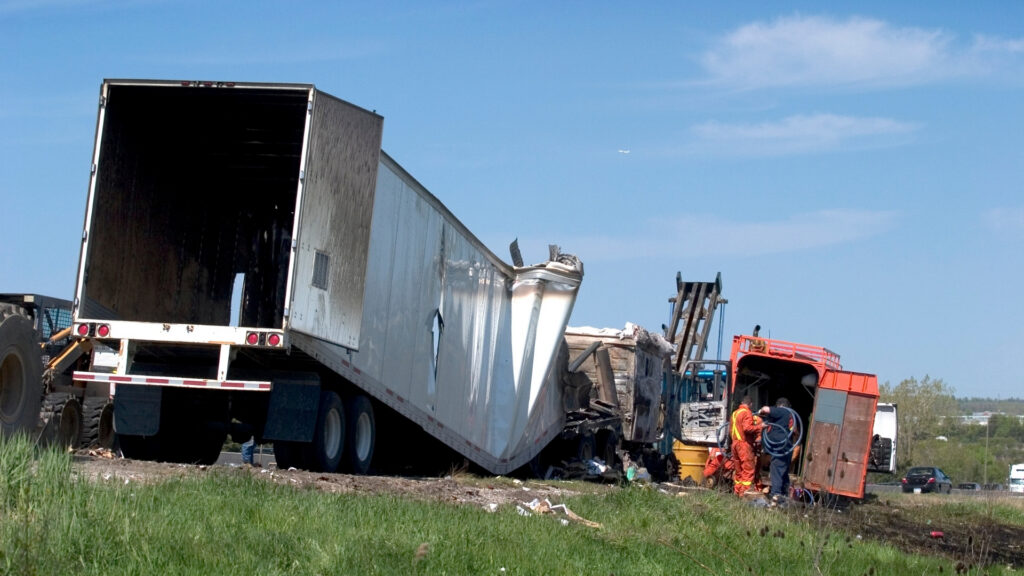
A Scottsdale truck accident lawyer looks past the driver to the motor carrier, the trailer owner, and the shipper. Arizona makes each defendant pay only its own percentage of fault under A.R.S. 12-2506. So the list of names on your complaint decides what you can actually collect.
Justice On Demand handles truck and commercial vehicle injury claims for people hurt in Scottsdale and across Maricopa County. Attorney Christian Pedersen works these cases from the firm’s Mesa office. The office is open 24/7, and consultations are free. This page gives the theory that reaches each defendant, not a list of names.
If a truck hit you on Loop 101 or Scottsdale Road, call Justice On Demand at (480) 934-0676 for a free consultation. The phone is answered 24 hours a day.
Why Arizona Fault Rules Decide Who Pays After a Truck Crash
Most truck accident pages list possible defendants and stop there. That list is close to useless in Arizona without the fault rules behind it. Justice On Demand starts every commercial vehicle case with two statutes, because those two statutes decide whether a judgment turns into money.
The first is A.R.S. 12-2505, Arizona’s comparative fault rule. The second is A.R.S. 12-2506, which abolished joint and several liability in this state. Together they explain why a case with one named defendant and four responsible companies can end in a verdict you cannot collect.
Arizona Reduces Your Damages by Your Share and Stops There
Arizona follows pure comparative fault. Section 12-2505 says damages “shall be reduced in proportion to the relative degree of the claimant’s fault.” There is no cutoff. A claimant found 80% at fault still recovers 20%. That same claimant would recover nothing in most states. The statute carves out one exception for a claimant who “intentionally, wilfully or wantonly caused or contributed to the injury.”
Each Defendant Pays Only Its Own Percentage of Fault
Arizona’s several liability statute says the liability of each defendant “is several only and is not joint.” Each one owes damages in direct proportion to its own percentage of fault. Subsection (B) tells the jury to weigh the fault of everyone who contributed, named as a party or not. Truck cases are won or lost in the first 90 days.
What Several Liability Does to a Judgment You Can Collect
Suppose a jury splits fault 60% to a trucking company and 40% to a tire shop that skipped an inspection. If you sued only the trucking company, you collect 60% and nothing more. The missing 40% does not shift to the defendant in the room. It disappears.
The Exceptions in Section 12-2506(D)
Subsection (D) keeps joint and several liability alive in a short list of situations. Two of them matter in trucking. The first covers defendants acting in concert. The second covers a person acting as the agent or servant of another. A third covers Federal Employers Liability Act claims.
Defendants Who Acted in Concert
Acting in concert means a conscious agreement to commit a tortious act. It is narrow and rarely the hook in a highway crash. It matters most when a carrier and a shipper knowingly moved an overweight or falsified load. Proving it takes documents.
The Agent and Servant Exception
This exception carries most truck cases. When the driver is the carrier’s agent or servant, the carrier stays jointly and severally liable for that share. A carrier cannot point at its own driver to cut its exposure. That is why respondeat superior belongs in every truck case.
Who Can Be Held Liable for a Truck Accident in Arizona
A tractor trailer on a public road involves five or six businesses before it leaves a yard. Any of them can end up on a verdict form. Under Arizona’s several liability rule, each one you leave out is a share of your damages you will not see.
The right question is not who was driving. It is which company controlled the decision that caused the crash. Often that is a dispatcher, a maintenance manager, or a loading crew. Truck accident claims across the Phoenix area almost always end with more than one defendant.
The Driver and the Motor Carrier
The driver is the obvious defendant and often the smallest source of recovery. The motor carrier is the party with a federal minimum insurance requirement. Under 49 C.F.R. 387.9, a for-hire carrier moving nonhazardous property in a vehicle rated at 10,001 pounds or more must carry at least $750,000. Certain bulk hazardous loads require $5,000,000. The carrier also hired, trained, and supervised the driver.
Equipment Owners, Brokers, Shippers, and Repair Shops
Tractors and trailers often belong to different companies. An owner-operator may own the tractor while a leasing company owns the trailer. A freight broker that selected an unsafe carrier can face its own negligence claim. So can a shipper or a loading crew that built an unbalanced load. A repair shop that returned bad brakes is a defendant, and so is a parts maker.
Leased Trucks and Section 376.12(c)
Carriers routinely run trucks they do not own. Federal leasing rules answer that. Section 376.12(c)(1) says the lease must give the authorized carrier lessee “exclusive possession, control, and use of the equipment.” Section 376.12(c)(4) adds that this language alone does not settle whether the driver is an employee or a contractor. This layer does not exist in an ordinary car accident claim.
What the MCS-90 Endorsement Actually Does
Most blogs call the MCS-90 an insurance policy. It behaves like a surety bond. The endorsement obligates the insurer to pay “any final judgment recovered against the insured for public liability,” whether or not the vehicle appears in the policy. The insured then agrees to reimburse the insurer for anything paid outside the policy. So the MCS-90 guarantees payment to the injured public, not coverage to the carrier.
Two Separate Theories Reach the Motor Carrier
Most competitor pages name the trucking company and move on. Naming it is not a theory. Arizona gives you two independent routes to the carrier, and they behave differently at trial. That distinction also changes what you get to see in discovery.
The first route runs through the driver. The second stands on its own and can survive even when the driver was careful. Pleading both is standard practice, because the records that support one often destroy the defense to the other. The firm handles these claims from its Mesa office.
Respondeat Superior Makes the Carrier Answer for Its Driver
Arizona holds an employer liable for an employee’s torts committed within the scope of employment. The courts ask which employer controlled the details of the work. The Court of Appeals said as much in Tarron v. Bowen Machine and Fabricating. In trucking, that control sits with the carrier whose operating authority the truck runs under. Section 12-2506(D)(2) keeps that liability joint rather than several.
Direct Negligence Claims Stand on Their Own
Arizona recognizes negligent hiring, training, and supervision as separate causes of action, as the Court of Appeals held in Kassman v. Busfield Enterprises. Negligent entrustment adds a fourth theory, aimed at a company that handed an 80,000-pound vehicle to an unfit driver. Under 49 C.F.R. 391.23, a carrier must pull the driver’s three-year record within 30 days of hire. That paperwork is where the strongest evidence sits.
Federal Safety Rules That Become Evidence of Fault
The Federal Motor Carrier Safety Regulations sit in Title 49 of the Code of Federal Regulations. Four parts do most of the work in an injury case. Part 382 covers drug and alcohol testing, Part 391 covers driver qualification, and Part 395 covers hours of service. Part 396 covers inspection and maintenance.
A violation is not automatic liability in Arizona. It is evidence of negligence, and it reframes the case. A carrier defending a rear-end collision argues about following distance. A carrier defending a logbook violation argues about its own safety system.
Hours of Service Limits Under Part 395
The federal hours of service rule sets the limits for property-carrying drivers. A driver may drive no more than 11 hours after 10 consecutive hours off duty. Driving is barred after the 14th consecutive hour of that shift. No driving is allowed once 8 hours have passed without a 30-minute interruption. Weekly caps run 60 hours in 7 days or 70 hours in 8 days.
Testing, Qualification, and Maintenance Under Parts 382, 391, and 396
Part 382 requires post-accident testing. Section 382.303 requires an alcohol test as soon as practicable when the crash killed someone. It also applies when the driver is cited within 8 hours and someone needed treatment away from the scene. The controlled substances trigger runs 32 hours instead of 8. Part 391 governs whether the driver was qualified at all, and Part 396 requires daily inspection reports.
The Evidence Clock Runs Out Long Before the Filing Deadline
Arizona gives you two years to file most injury lawsuits. The records that prove who is liable do not last that long. Federal retention periods are measured in months, so a carrier following the rules can destroy the best evidence while you are still in physical therapy.
A preservation letter is the fix, and it has to go out early. It tells the carrier and its insurer in writing to hold specific records. Once that letter lands, routine destruction stops being routine. Attorney Christian Pedersen sends one before the first call with an adjuster.
Federal Retention Windows Are Measured in Months
The numbers are specific. Section 395.8(k)(1) makes a carrier keep records of duty status and supporting documents for at least 6 months from receipt. Section 395.22(i)(1) requires a 6-month backup copy of electronic logging device records. Driver vehicle inspection reports last 3 months under Section 396.11. Maintenance records under Section 396.3(c) last one year, plus 6 months after the vehicle leaves the carrier’s control.
Deadlines, Including 150 Days for a Non-Party Notice
Arizona Rule of Civil Procedure 26(b)(5) lets a defendant assign fault to someone not in the lawsuit. The defendant must serve that notice within 150 days after filing its answer, naming the non-party and the facts. A.R.S. 12-542 gives you two years to sue. A public entity shortens both deadlines. Under A.R.S. 12-821.01 you must file a claim within 180 days, and A.R.S. 12-821 cuts the lawsuit deadline to one year.
What a Scottsdale Truck Accident Lawyer Checks in Maricopa County
Where a truck crash happened inside Scottsdale changes who investigated it, where the injured person was taken, and where the case gets filed. None of those answers is the same across the Phoenix metro. The report, the trauma record, and the filing venue each come from a different agency.
The Arizona Department of Transportation’s 2024 Motor Vehicle Crash Facts report recorded 4,219 crashes in Scottsdale. That total included 15 fatal crashes and 1,421 injury crashes, with 2,113 people injured. Maricopa County recorded 88,094 crashes in the same year. Those totals are the backdrop for the details below.
Which Agency Investigated and Wrote the Report
Scottsdale is not policed by the county sheriff, and it is not policed by the state on its own streets. Two different agencies write truck crash reports inside the city limits, and they hold different evidence. Requesting the wrong one costs weeks. The scene diagram, the officer’s measurements, and any commercial vehicle inspection live with whichever agency took the call.
City Street Crashes Belong to the Scottsdale Police Department
Scottsdale runs its own police department. District officers handle initial traffic collision investigations, and the Special Operations Division inside the Uniformed Services Bureau includes a Traffic Enforcement Section. A crash at Scottsdale Road and Shea Boulevard, or on Pima Road, or on Bell Road, is a Scottsdale Police Department matter.
Loop 101 Crashes Belong to the Arizona Department of Public Safety
Loop 101, the Pima Freeway, runs along Scottsdale’s western edge. Crashes on that state highway fall to the Arizona Department of Public Safety, not the city. AZDPS limits its online citizen report to crashes with no injuries, under $2,000 in damage, and two vehicles. A truck crash never qualifies, so a trooper investigates.
Where You Were Treated and Where the Case Gets Filed
Two more local facts shape a Scottsdale truck case. The first is medical. A serious truck injury goes to a trauma center, and that trauma record becomes the spine of the damages claim. The second is procedural, because the courthouse that hears the case is not in Scottsdale at all. Both surprise people who assume everything happens close to home.
The Trauma Center That Serves Scottsdale
HonorHealth Scottsdale Osborn Medical Center at 7400 East Osborn Road is a Level I trauma center. It sits on the Arizona Department of Health Services list of state designated trauma centers, effective October 27, 2024, and running through October 27, 2027. A victim taken there generates trauma activation records, imaging, and billing.
No Superior Court Civil Courthouse Sits in Scottsdale
A Scottsdale injury lawsuit over $10,000 is filed in Maricopa County Superior Court and heard downtown. Civil matters run through the East Court Building at 101 West Jefferson Street in Phoenix. The only Superior Court facility inside Scottsdale is the Adult Probation office. Claims of $10,000 or less go to a justice court under A.R.S. 22-201.
Questions and Answers About Truck Accident Liability in Scottsdale
These are the questions people ask after a commercial truck crash in Scottsdale, usually within the first week. The answers below are general, and every case turns on its own facts. Nothing here replaces advice about your own crash, your own injuries, and your own paperwork.
If your situation does not fit any of these, that is normal. Truck cases vary more than car cases, because the corporate structure behind each truck is different. A short phone call usually sorts out which category you are in, and what has to happen first.
Can I Still Recover If the Police Report Blames Me?
Yes. Arizona uses pure comparative fault under A.R.S. 12-2505, so your recovery is reduced by your share and never erased by it. A police report is not a verdict. Officers assign fault with partial information, and that opinion can be challenged.
How Many Defendants Does a Typical Truck Case Have?
More than a car crash and fewer than people expect. Two to five is common once the driver, the carrier, the trailer owner, and any maintenance company are sorted out. The count depends on who controlled the decision that caused the crash.
What Should I Do About the Trucking Company’s Insurance Adjuster?
Report the crash and stop there. Do not give a recorded statement about how the crash happened or how badly you are hurt before your treatment is underway. The adjuster works for the carrier, and that call comes before you know what your injuries are.
How Fast Do I Need to Act If a City Truck Was Involved?
Immediately. A claim against a city, county, or state entity must be served within 180 days under A.R.S. 12-821.01, and the lawsuit must be filed within one year under A.R.S. 12-821. Those deadlines run before you know the full extent of your injuries.
Talk With a Scottsdale Truck Accident Lawyer While the Records Still Exist
Arizona’s several liability rule punishes an incomplete defendant list. Federal retention rules give you months rather than years to build one. Those two facts stack in every truck case, and the work that matters happens early.
Justice On Demand handles truck and commercial vehicle claims in Scottsdale, Mesa, and Maricopa County. Attorney Christian Pedersen sends preservation letters, requests the driver’s logs and the electronic logging data, and identifies the carriers behind the truck. The office is open 24/7, consultations are free, and new clients get an initial 30-day satisfactory period.
Bring the crash report, the hospital that treated you, and any photograph of the trailer numbers. A Scottsdale truck accident lawyer can usually tell you in one conversation how many defendants your case has. Call Justice On Demand at (480) 934-0676 or reach the firm through its contact page.