


Behind every semi crash sits a company. If you are searching for a Semi-Truck Accident Lawyer in Phoenix, you are up against more than the driver who hit you. You are up against the business that hired him, the dispatcher who scheduled him, and the insurer that defends them both. That fight is winnable. It just cannot be won alone.
Trucking is one of the most regulated industries on American roads. The federal hours of service rules for truck drivers dictate how long a trucker can drive before rest becomes mandatory. When companies push drivers past those limits to hit a delivery window, the paper trail proves it. Finding that trail is exactly what a truck accident case is about.
The gap between you and the trucking company is information. They know what the logs say, what the driver’s file contains, and what their insurance is worth. You know none of it yet. Closing that gap is step one, and it happens fast once a lawyer starts demanding records the law requires them to keep. From that point on, every fact works for whoever found it first.
Justice On Demand digs into the driver, the carrier, and the records they would rather keep quiet. Call (480) 934-0676 for a free consultation, any hour of the day or night. The sooner the investigation starts, the more evidence survives.
Why Hire a Semi-Truck Accident Lawyer in Phoenix Before the Trucking Company Builds Its Defense
Trucking companies do not wait to see if you sue. Within hours of a serious wreck on I-10, many carriers have an adjuster assigned, a defense firm on notice, and an investigator headed to the scene. Some victims get a recorded statement request while still wearing a hospital bracelet. Every one of those moves is designed to shrink your claim before it exists.
Justice On Demand answers that machine with speed of its own. Attorney Christian Pedersen and his team start preserving records and building pressure from day one, and the first conversation is free. You talk to a lawyer before you ever talk to their adjuster. That order matters more than most people realize.
Federal record retention rules make the timing concrete. Carriers may lawfully destroy certain driver logs and supporting documents after six months, and some internal records cycle out faster. A claim that starts late starts smaller, through no fault of yours. Starting now costs nothing and protects everything.
How Trucking Companies Respond Within Hours of a Crash
Think about the first night after a crash near the I-17 interchange. You are in the emergency room. The carrier’s investigator is photographing skid marks, its adjuster is pulling your insurance information, and its lawyers are prepping the driver for questions. Nothing about that response is illegal. It is simply one-sided, and it stays one-sided until you put your own team on the field.
Large carriers run this playbook so often the industry gave it a name, rapid response. Some keep defense lawyers on call around the clock specifically for crash scenes, with reconstruction experts a phone call behind them. The playbook works because most victims spend those same hours doing exactly what they should, getting medical care, while the record gets shaped without them. Your lawyer’s first job is unshaping it.
Why Acting Fast Protects Logbooks and Driver Records
Federal rules only require carriers to keep certain records for limited periods. Driver logs, inspection reports, and supporting documents can be lawfully destroyed once those windows close. A preservation letter from your attorney freezes everything in place, from the electronic logs to the driver’s qualification file. Justice On Demand sends those demands at the start of every truck case, because a record that no longer exists cannot prove your claim.
The preservation demand reaches further than most people expect. It covers the driver’s hours, his qualification and training file, post-crash drug and alcohol test results, dispatch communications, and the truck’s electronic data. Each category answers a different question about why the crash happened. Together they leave the carrier very little room to improvise a story later. The letter also puts the company on notice that a judge may punish destruction, which changes how carefully its employees treat your file from that day forward.
Who Can a Semi-Truck Accident Attorney in Phoenix Hold Responsible
Follow the money and it rarely stops with the driver. Trucking involves a chain of businesses, and each link that failed you can owe you. More responsible parties usually means more insurance coverage, which matters when your injuries are measured in surgeries instead of stitches.
Justice On Demand maps that chain in every semi-truck case before deciding who to pursue. The wrong defendant list leaves money on the table. The right one changes what your recovery looks like, and it usually gets longer the deeper the investigation goes.
Depending on the facts, a claim can reach any of these parties.
- The truck driver whose choices caused the crash
- The motor carrier that hired, trained, and dispatched the driver
- The separate owner of the tractor or the trailer
- The shipper or loading crew that packed the cargo
- The maintenance contractor that serviced the brakes or tires
- Another motorist whose move set the chain reaction off
Each defendant brings its own policy, its own lawyers, and its own version of events, and your attorney holds all of them to account at once. Expect finger-pointing between them too. The carrier blames the loader, the loader blames the shop, and every pointed finger confirms the same useful fact. None of them are pointing at you.
The Truck Driver Behind the Wheel
Speeding to make a delivery window, texting a dispatcher, or driving impaired makes the trucker personally liable. Here is the practical problem. Most drivers do not have personal assets that match catastrophic injuries. The driver’s negligence still matters enormously, because it becomes the doorway to the company’s much deeper coverage.
The driver’s conduct also gets documented in ways ordinary motorists escape. Federal rules require post-crash drug and alcohol testing after qualifying wrecks, and his phone records, citations, and prior violations all come out in discovery. A driver with a history becomes evidence against the company that kept him rolling, which is why his personnel file matters as much as his driving.
The Trucking Company That Hired and Supervised the Driver
Carriers answer for their drivers in two separate ways, and a strong case often uses both. The first targets the company’s own decisions. The second attaches the driver’s conduct to the company automatically. Justice On Demand evaluates both routes in every case, because each unlocks different evidence and different arguments at settlement time.
Negligent Hiring and Training Claims
A carrier that hands 80,000 pounds to the wrong person owns that decision. Negligent hiring means the company skipped background checks, ignored a record of violations, or overlooked failed drug tests. Negligent training and supervision mean the company never taught safe practices or looked the other way while rules got broken. Motor vehicle records and prior employer checks are required screening, so gaps in the file speak loudly. Discovery into personnel records tells this story, and carriers fight hard to keep those files closed.
Vicarious Liability for On the Job Drivers
The legal term is respondeat superior, and the plain English version is simple. An employer answers for what its employee does within the scope of the job. A trucker hauling a dispatched load through Tempe is squarely on the job, so his negligence becomes the company’s negligence. No proof of bad hiring required. This doctrine is often the shortest path to the policy that can actually pay your claim, which is why defense lawyers attack the employment relationship first and why your attorney documents it early.
Cargo Loaders Maintenance Shops and Other Third Parties
Some crashes start long before the truck reaches Phoenix. A loading crew that stacked pallets unevenly created a rollover waiting for a curve. A shop that botched a brake job created a runaway. These companies rarely appear in the police report, and finding them takes real investigation.
Paperwork exposes them. Bills of lading identify who loaded the trailer, repair invoices identify who touched the brakes, and lease agreements identify who owned each piece of equipment. When Justice On Demand adds a third party to a case, another insurance policy usually comes with it, and the added pressure often moves the entire settlement conversation. Defendants who expected to split blame two ways renegotiate quickly when a third company joins the caption.
How Driver Fatigue Gives a Phoenix Semi-Truck Accident Lawyer a Case To Build
Fatigue is the trucking industry’s quiet epidemic. A drowsy driver reacts late, drifts between lanes, and sometimes never brakes at all before impact. The overnight stretches through Phoenix hit hardest, when freight schedules collide with the hours the human body insists on sleeping. The Federal Motor Carrier Safety Administration’s Large Truck Crash Causation Study found 13 percent of truck drivers were fatigued at the time of their crash, and safety researchers consider that figure conservative.
Fatigue also leaves fingerprints in the records. Justice On Demand compares the driver’s logs against fuel receipts, toll timestamps, and GPS data, because tired driving is usually scheduled driving. Someone set that delivery window. Someone approved that route. The case grows every time the paperwork contradicts the logbook. A fuel receipt from Eloy timestamped during a logged rest break is small on its own. Stacked with three more like it, it becomes a pattern a jury will not forgive.
Federal Hours of Service Rules Truckers Must Follow
The hours of service rules exist because exhausted truckers kill people. They cap how long a driver can work before rest stops being optional. The core limits are worth knowing before you talk to any insurance company.
- A maximum of 11 hours of driving after 10 consecutive hours off duty
- All driving confined to a 14 hour on-duty window
- A 30 minute break required after 8 cumulative hours behind the wheel
- No more than 60 on-duty hours in 7 days, or 70 hours in 8 days
- A 34 hour restart required to reset the weekly clock
When a crash follows a violation of any line on that list, the violation becomes powerful proof that the driver and carrier chose schedules over safety. Juries respond to broken safety rules, and adjusters price that response into settlements long before trial.
How Electronic Logging Devices Expose Violations
Since 2017, federal law has required electronic logging devices in most commercial trucks. An ELD records driving time automatically from the engine itself, which makes the old trick of pencil-whipped paper logs much harder to pull off. Harder does not mean impossible. Drivers still log off duty while loading, and carriers still pressure drivers to game the system.
The device data tells on them. ELD systems flag unassigned driving time, record every edit made to a log, and timestamp the account that made the change. A log edited by a dispatcher the morning after your crash is the kind of detail that reshapes a case. Your attorney cross-checks the ELD file against every other timestamp the truck left behind, from fuel pumps to weigh stations. When the timestamps disagree, the driver’s credibility goes with them, and settlement leverage shifts to your side of the table.
What Federal Fatigue Research Shows About Truck Crashes
Federal crash research keeps reaching the same conclusion. Tired truckers crash more, and their crashes run severe. FMCSA data recorded 2,625 large-truck crashes in Arizona in 2023, killing 148 people. Numbers like those are why the rules exist, and why a jury takes hours of service violations seriously when your lawyer proves one happened before your wreck.
Fatigue evidence also explains crashes that otherwise look inexplicable. No skid marks before a rear-end impact. A slow drift across the fog line on a straight, empty stretch of I-10. When the physical evidence shows no reaction at all, the driver’s previous 14 hours become the most important chapter of the case, and the logs either explain it or expose it.
What Compensation Can a Semi-Truck Accident Attorney in Phoenix Recover for You
Semi-truck injuries carry semi-truck costs. Multiple surgeries, months without a paycheck, a body that may never do your job again. The compensation conversation has to start with everything the crash took, and it cannot end with the first number an adjuster floats. First numbers exist to test whether you know better, and after this page, you do.
Justice On Demand prices the whole loss before negotiating a dollar of it. That means medical experts on future care, economists on future earnings, and a demand package the insurer cannot wave away.
A serious demand package reads like a case file, not a letter. Imaging, surgical reports, wage records, expert projections, and the liability evidence sit together in one document that previews exactly what a jury would see. Adjusters settle differently when the trial exhibit already exists. Building that package takes weeks of coordinated work between your attorney, your doctors, and the experts. It is also the single best investment a serious claim can make.
Layers of Trucking Insurance That May Apply
Federal rules require most interstate carriers to hold at least $750,000 in liability coverage, and serious operations carry far more. Coverage often stacks in layers. The tractor may carry one policy, the trailer another, and the carrier an excess policy above both. Third parties like shippers and maintenance contractors add their own.
Finding every layer is detective work with a real payoff. Insurers disclose coverage reluctantly and rarely volunteer the excess policies sitting above the primary one. Your attorney demands full disclosure in writing, because the difference between settling within one policy and recovering what the case is worth often lives in a layer nobody mentioned.
Damages for Medical Care, Lost Wages, and Future Losses
Your claim covers the emergency room, every surgery after it, and the care your doctors project for the years ahead. It covers the paychecks you lost and the earning capacity a permanent injury erased. It covers pain, disrupted sleep, and the parts of your life the crash closed off.
The quieter losses count too. Household work you can no longer do, help your family now pays for, the promotion that went to someone else while you rehabbed. Justice On Demand documents each category separately, because lumped-together claims settle low and itemized ones do not. Every line item you can prove is a line item they must pay.
What Do Injured Drivers Ask a Semi-Truck Accident Lawyer in Phoenix
The questions below come up in nearly every consultation, usually in the first ten minutes. The short answers can steady you tonight. The full answers depend on your crash, your injuries, and the carrier on the other side.
Justice On Demand walks through all of it for free, whenever you call. Bring your questions, your police report number, and anything the insurance company has sent you. Ten minutes of preparation makes the first conversation twice as useful.
Can I Sue the Trucking Company and Not Just the Driver
Yes, in most cases. When the driver was working, the company generally answers for his negligence automatically, and its own hiring or supervision failures can add a second claim on top. Suing the company is usually the only realistic path to full compensation, because it holds the insurance that matches your injuries. The driver alone almost never does. Expect the carrier to resist, and expect the employment records to settle the argument.
What Happens If the Truck Driver Was an Independent Contractor
The label matters far less than carriers want you to believe. Courts look at who controlled the work, from dispatch schedules to equipment to routes, not at what the contract calls the driver. A company that controls a driver like an employee can be held responsible like an employer. This is a fact fight, and it is winnable with the right records. Federal operating authority rules also limit how far carriers can hide behind leased drivers, which gives your attorney another angle when the contract defense shows up.
How Soon Should I Call a Lawyer After a Semi Crash
Before you give any statement to the trucking company’s insurer, and ideally within days of the wreck. Log data cycles out, camera footage gets overwritten, and witnesses move. Early action also stops the adjuster games before they start. Justice On Demand answers 24/7, so the answer is simple. Call tonight, even from a hospital bed. Plenty of strong cases start exactly there, and the firm handles the rest while you heal.
Talk to a Semi-Truck Accident Lawyer in Phoenix for Free Today
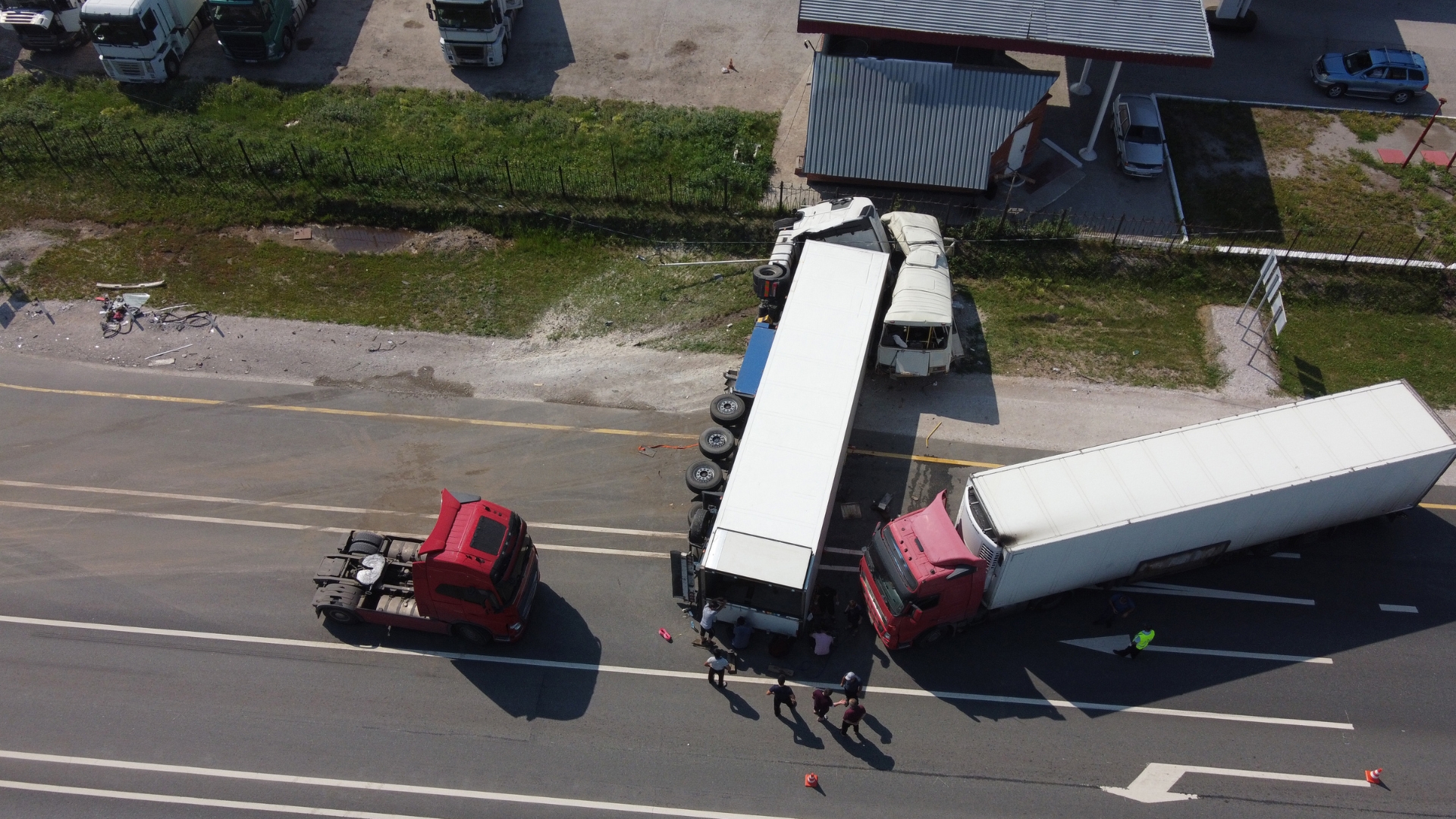
The trucking company started working on your crash the day it happened. Every day you wait widens their lead. Evidence is sitting in their systems right now that could decide your case, and it only gets preserved if someone demands it.
Justice On Demand takes on trucking companies and their insurers for injured people across Phoenix, Mesa, and the Valley, from its office on West Baseline Road. The consultation is free. The phones are answered around the clock. New clients also get an initial 30-day satisfactory period, so hiring the firm is a decision you can make with confidence.
You bring what you have. A police report number, photos from the scene, the adjuster’s voicemail. The firm turns it into a plan and tells you what your claim is really worth, with no pressure attached.
Wondering whether your crash even justifies a lawyer? That question is exactly what the free consultation answers. Some cases resolve with a few firm letters. Others need the full fight. Either way, you deserve to know which one you are holding before an adjuster convinces you it is neither.
Get a Semi-Truck Accident Lawyer in Phoenix working while the evidence still exists. Reach Justice On Demand through our contact page or call (480) 934-0676 and start your free consultation now.